

Do Not Forget to Clean Your Furnace Exhaust Vent
If you’ve changed your air filter and scheduled your annual fall HVAC tune-up, you are well on your way to preparing your furnace for winter in Michigan.
Another task that deserves a top slot on your fall checklist is cleaning your furnace exhaust vent, a critical but often overlooked task.
At ESI Heating and Cooling, we believe that vent inspection and cleaning is as important as replacing your system air filter. Both help keep you safe: the filter traps debris, and the vent expels toxic exhaust gases. We can help you avoid letting vent cleaning slip through the cracks in your HVAC maintenance routine.
When scheduling your annual fall heating system tune-up in Portland, MI, why not make vent cleaning a priority, too?
In the meantime, read on to discover what these vents do, how they get blocked, and why keeping them clear is a must.
What Is a Furnace Vent and How Does It Work?
Every gas furnace produces exhaust gases, including water vapor, carbon dioxide, and carbon monoxide, as it burns natural gas to heat your home. The exhaust vent is the pathway that safely carries these dangerous byproducts out of your home.
Depending on the age and efficiency of your furnace, your venting setup will exhaust gases in one of two ways:
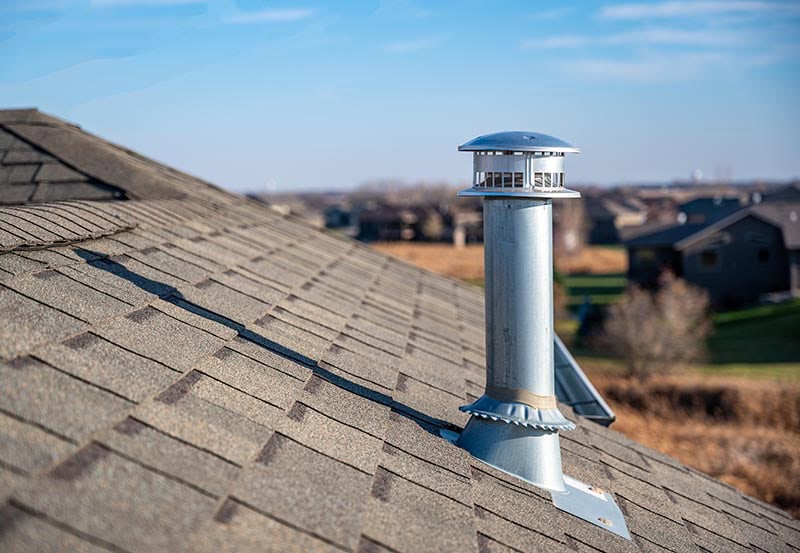
Standard-Efficiency Furnaces: These traditional units usually vent through a metal flue that travels through the ceiling and out of your roof. The hot exhaust rises and escapes from the house.
High-Efficiency Condensing Furnaces: Because high-efficiency furnaces extract so much heat from the combustion process, the exhaust gas is much cooler and won’t rise naturally. Instead, these systems use a motorized blower fan to push exhaust gases horizontally or vertically through PVC pipes out the side wall of your house or roof.
What Happens When a Furnace Exhaust Vent Gets Blocked
A blocked exhaust vent can cause the equipment to shut down or may pose a severe health hazard.
Both standard-efficiency and high-efficiency furnaces produce carbon monoxide, an odorless gas that can cause illness or even death. In fact, the U.S. Centers for Disease Control and Prevention reports that more than 100,000 Americans visit an emergency department annually for unintentional carbon monoxide poisoning, and 400 die.
A blockage increases the risk of this toxic gas leaking into your living areas.
The good news is that modern furnaces have safety backups, such as pressure switches or draft-proving switches, that shut the furnace down if the system detects improper venting. However, relying entirely on safety switches isn’t ideal. If your furnace keeps locking out on a freezing January night, you are left without heat until a technician arrives.
Fully Blocked vs. Partially Blocked Furnace Exhaust Vents
While a total blockage will typically trigger a safety shutdown, a partially blocked vent can cause trouble while your furnace operates, and you may not even realize it:
Working Harder: A partial obstruction forces the inducer motor to struggle against restricted airflow, causing early motor burnout.
Lowering Lifespan: Operating against constant backpressure stresses internal components, shortening the overall lifespan of your heating system.
Trapping Moisture: In high-efficiency PVC venting, restricted airflow can trap acidic condensation where it shouldn’t be, corroding internal parts and heat exchangers.
Can You DIY Vent Cleaning, or Should You Call a Pro?
While you can easily do a quick visual check of your exterior PVC vent outside your home to ensure snow, leaves, or mulch aren’t blocking it, deep cleaning is best left to professionals.
Our ESI Heating and Cooling pros use specialized brushes and inspection cameras to check long runs of venting for bird nests, wasp nests, spider webs, or internal structural collapses. We can test combustion efficiency and ensure that the exhaust gas exits your home at the correct speed.
Working with gas lines, electrical controls, and rooftop chimneys carries risks no DIY-er should assume.
Environmental Factors That Prompt Vent Cleaning
As a general rule, you should have your furnace exhaust vent inspected and cleaned at least once a year, ideally during your annual fall HVAC tune-up before heating season starts.
However, certain environmental conditions mean you may need to inspect and clean your vents more frequently:
Heavy Snowfall and Ice: Drifting snow can completely bury exterior side-wall PVC vents, leading to immediate furnace lockouts.
Wildlife and Foliage: Homes surrounded by mature trees, heavy brush, or areas with high wildlife activity, such as birds or squirrels looking for a warm spot to nest, are prone to blocked vent terminals.
High-Wind Areas: Strong winds can occasionally blow debris directly into unsecured exterior vent caps.
Inspect Your Furnace Vent in Portland, MI
Don’t wait for a mid-winter breakdown or a safety warning. Schedule your annual fall furnace tune-up and an exhaust vent inspection in Portland, MI, with ESI Heating and Cooling today. You’ll lower your risk of toxic gas leaks and reduce stress on your heating system. Call us at 517-647-6906 or request service online.